
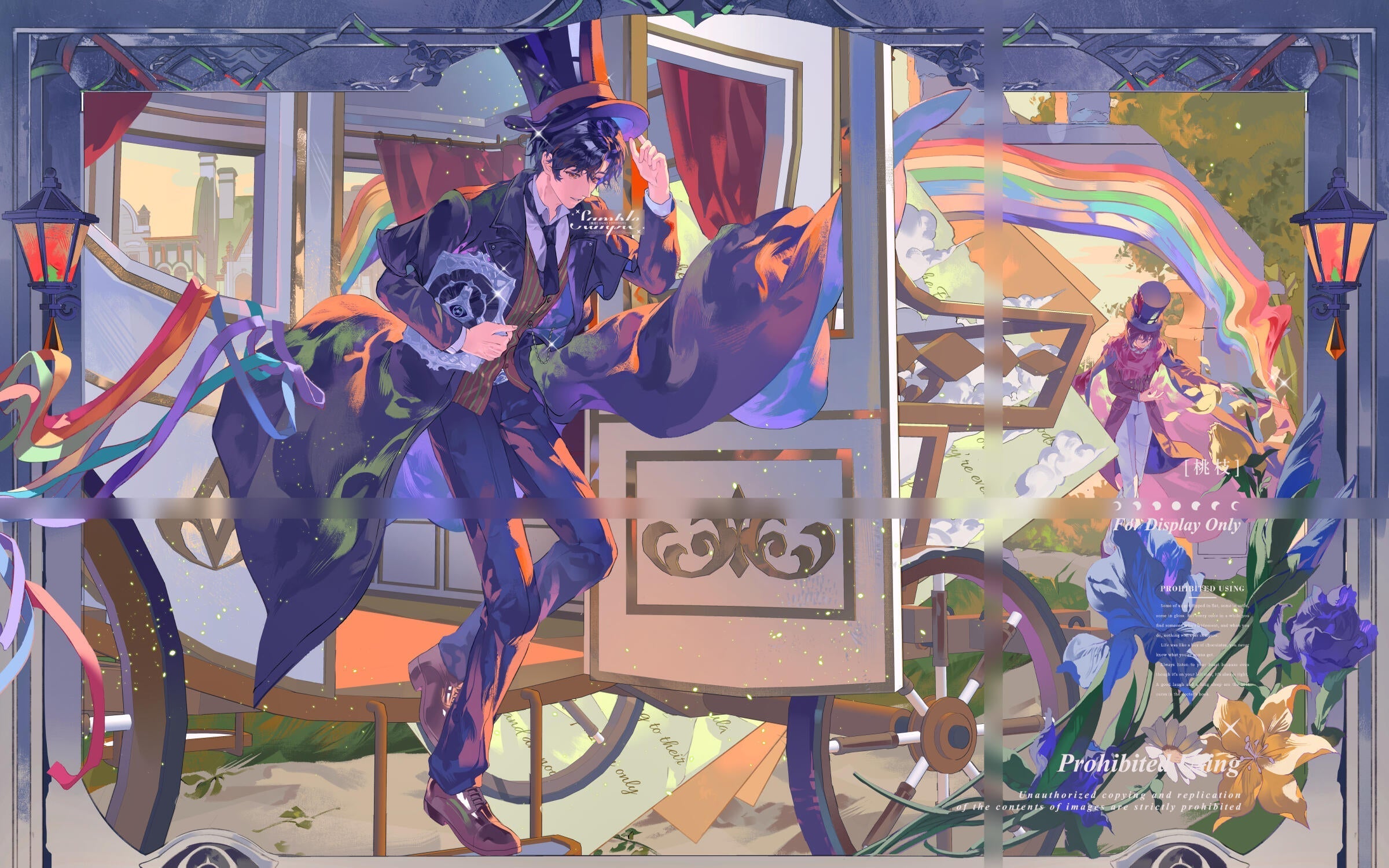

Most people watch the Lord of the Mysteries Donghua and see a masterpiece of Victorian Steampunk. They see the smog of Tingen, the Lovecraftian monsters, and the tentacles.
But if you look closer, you’ll realize something weird: the magic system doesn't feel like typical Western fantasy. It’s too systematic. It’s too… philosophical.
That’s because the protagonist, Klein Moretti, isn’t just a British detective fighting Cthulhu monsters. Underneath the top hat and the suit, he is practicing hardcore Taoist Cultivation.
The author, Cuttlefish That Loves Diving, pulled off a brilliant trick. He took the core mechanics of Chinese Metaphysics and repainted them with Western symbols. And that is exactly why this Chinese Anime (Donghua) stands out in a sea of generic Isekai.
Let’s peel back the Western skin and look at the Eastern bones of the story. Here are the 3 Taoist concepts that secretly run the show.
1. The "Acting Method": It’s Not Just Roleplay
In most Western RPGs, you kill a goblin, get XP, and level up. Simple. In Lord of the Mysteries, you level up by "Acting."
Why? This is actually the Taoist concept of "Ru Shi" (Entering the World).
The idea is simple but profound: You can't transcend humanity (become a God) until you have fully experienced humanity. When Klein acts as a "Seer" or a "Clown," he isn't just pretending to gain powers. He is immersing himself in that life to understand the universal law ("Dao") of that pathway.
The moment of "digesting" the potion? That’s essentially Enlightenment (Wu). It’s that click in your brain where you realize: "I am acting as a Clown, but I am not defined by being a Clown." You master the identity so you can let it go.
Collector's Note: The symbols on our Official Tarot Fugue Cards aren't random art. They depict the exact imagery Klein visualizes during these moments of enlightenment.
2. The "Anchors": Why Gods Need Humans
One of the creepiest mechanics in the Donghua is that high-level Gods go insane if they don’t have believers (Anchors).
In Western theology, God is usually absolute and independent. But in Chinese Folk Religion, gods run on an economy of "Incense Fire" (Xiang Huo).
If people stop praying, the god loses power or fades away. It’s a symbiotic relationship.
In Lord of the Mysteries, this concept gets a horror twist. The "Divinity" in the potion is constantly trying to erase your "Humanity." You need the prayers of real people—your Anchors—to remind you of who you are. This is why the Tarot Club is so vital for Klein. He isn’t just gathering intel; he’s gathering the "Incense Fire" he needs to stay sane against the corruption of the gray fog.
3. Paper Figurines: Burning Money for Life
If you’ve watched the Donghua, you know Klein’s signature move: shaking his wrist, burning a paper doll, and teleporting out of danger.
This isn't standard magic. This is straight-up Maoshan Sorcery (a sect of Taoism famous for talismans).
It’s called "Ti Shen" (Body Substitute). The logic is that you imbue a paper doll with your spiritual energy ("Qi"). When a fatal curse or bullet hits you, the universe is tricked into thinking the doll is you.
Visually, when Klein burns the paper, it mimics how Taoist priests burn yellow talismans to activate spells. He is literally "burning currency" (his spirituality) to bribe the Grim Reaper and buy another chance at life.
Conclusion: The Perfect Hybrid
This is why Lord of the Mysteries feels so different from other shows. It wears the clothes of Sherlock Holmes, but it has the soul of a Taoist Master.
It teaches us that power comes with a cost, and that keeping your humanity is the hardest quest of all.
If you love this blend of Eastern philosophy and Western aesthetic, you’ll appreciate the details in our official collection. We designed them to capture this exact duality.
👉 [View All Lord of the Mysteries Merch]



Share:
Steampunk, Cthulhu, and Tarot: Why Does Asia Love "Lord of the Mysteries" Without Having the Cultural Roots?
Why We Built Oriloot: The Mission to Bring Authentic Donghua Merch to the World