
Omniscient Reader's Viewpoint, often shortened to ORV, begins with a premise that sounds instantly clickable: an ordinary reader suddenly finds himself trapped inside the web novel he has followed for years. The world ends, the rules of fiction become real, and Kim Dokja is the only person who knows what should happen next.
That setup is exciting enough on its own. It gives readers survival games, hidden rules, monsters, sponsors, constellations, and a protagonist who can use story knowledge like a weapon. But the real reason Omniscient Reader's Viewpoint became so addictive is deeper than the plot hook.
ORV understands readers.
It understands what it means to love a story that other people ignore. It understands why someone might memorize character details, predict plot turns, reread painful scenes, and hold onto fiction during lonely years. Instead of treating that kind of reading as escapism, Omniscient Reader's Viewpoint turns it into power.
That is why ORV does not feel like just another apocalyptic fantasy. It feels personal.
What Is Omniscient Reader's Viewpoint About?

Omniscient Reader's Viewpoint follows Kim Dokja, an office worker who has spent years reading a long web novel called Three Ways to Survive in a Ruined World. He is not famous, wealthy, or naturally heroic. He is simply the only loyal reader who stayed with the story until the end.
Then the novel becomes reality.
The subway ride home turns into the beginning of an apocalypse. People are forced into deadly scenarios, and survival depends on understanding the rules faster than everyone else. Kim Dokja realizes that the fictional world he knows so well is now unfolding around him.
This is the core appeal of ORV: the reader becomes the person who can change the story.
But the series quickly becomes more than a clever "I know the future" fantasy. Kim Dokja's knowledge helps him survive, but it also forces him to face the emotional weight of knowing a story from the outside. He knows the main character's pain. He knows future tragedies. He knows who may live, who may die, and which choices could break the people around him.
Knowledge is power in ORV, but it is also responsibility.
Why Kim Dokja Is Such a Memorable Protagonist
Kim Dokja is not memorable because he is the strongest person in the room. He is memorable because his strength comes from something quiet: attention.
He paid attention when no one else did.
For years, Kim Dokja read a story that almost nobody around him cared about. He remembered side characters, hidden skills, strange rules, repeated failures, and tiny details that later became essential. In the ruined world, this knowledge gives him a real advantage. But emotionally, it means something more important.
Kim Dokja is proof that reading was not useless.
That idea is one of the strongest reasons Omniscient Reader's Viewpoint connects with fans. Many readers know what it feels like to love a story intensely, even when other people dismiss it as a hobby, a phase, or a waste of time. ORV takes that private attachment and says: what if this mattered? What if your attention could save lives? What if the story that kept you alive could become the story you help rewrite?
Kim Dokja's power is not only his memory of the plot. His power is the fact that he stayed.
Kim Dokja and Yoo Joonghyuk: Reader vs Protagonist
One of the most fascinating parts of ORV is the relationship between Kim Dokja and Yoo Joonghyuk.
Yoo Joonghyuk is the original protagonist of the novel Kim Dokja read. He is a regressor, a survivor, and a man shaped by repeated failure. In another story, Kim Dokja might simply use Yoo Joonghyuk as a tool. After all, he knows the plot. He knows the protagonist's strengths. He knows which choices should lead to victory.
But Omniscient Reader's Viewpoint refuses to make it that simple.
Kim Dokja knows Yoo Joonghyuk's story, but he does not automatically understand Yoo Joonghyuk as a person. That difference matters. A character is not just a collection of plot points. A protagonist is not just a weapon for the reader to control.
As the story continues, Kim Dokja has to confront the gap between reading suffering and standing beside someone who has lived through it. Yoo Joonghyuk is not easy to guide, comfort, or trust. He is stubborn, damaged, dangerous, and deeply human in the way ORV defines humanity: someone who keeps moving even after too many endings.
Their dynamic gives ORV much of its emotional tension. It is not only about strategy. It is about whether a reader can truly meet a character as an equal.
ORV Is a Story About Stories

The title Omniscient Reader's Viewpoint is already a clue. This is not just a story about an apocalypse. It is a story about viewpoint: who watches, who reads, who remembers, and who gets to decide what a story means.
In ORV, stories have weight. They can become weapons, identities, contracts, and sources of survival. Characters are shaped by the stories told about them, but they also struggle against those stories. Readers are not passive. They witness, interpret, misunderstand, love, and sometimes save.
That is why ORV works so well for fandom culture. It understands that fans do not simply consume stories. Fans analyze them. They defend characters. They argue over motives. They build theories, make edits, write essays, and return to scenes that hurt because those scenes feel meaningful.
Omniscient Reader's Viewpoint turns that entire emotional experience into part of the plot.
It tells readers: your act of reading is not invisible.
Why ORV Feels So Emotional
Many people start ORV for the survival-game premise, but they stay for the emotional damage.
The story is full of action, but the scenes that fans remember most often are not only battles. They are moments of recognition, sacrifice, loyalty, and impossible choice. Kim Dokja repeatedly tries to protect people while hiding how much he is carrying. His companions become more than allies. They become the reason the story matters.
This is where ORV changes shape. At first, the question seems to be: how can Kim Dokja survive this world?
Later, the question becomes: what kind of ending is worth surviving for?
That shift is powerful because ORV does not treat victory as a simple destination. Survival without connection is empty. Knowledge without responsibility is dangerous. A perfect ending that abandons the people you love may not be perfect at all.
The story keeps asking whether a reader can change the ending without losing themselves in the process.
Why New Readers Should Try Omniscient Reader's Viewpoint
If you enjoy clever protagonists, found family, mythological systems, survival games, emotionally complicated relationships, and stories about stories, Omniscient Reader's Viewpoint is absolutely worth trying.
But the best reason to start ORV is not only that it is exciting. The best reason is that it understands why people read in the first place.
People read to escape, yes. But they also read to endure. They read to find language for feelings they cannot explain. They read to meet characters who make loneliness feel less permanent. They read because sometimes a fictional world can become a real source of strength.
Omniscient Reader's Viewpoint takes that truth seriously.
It begins with a reader at the end of the world, but it becomes a story about every person who has ever loved fiction enough to let it change them. That is why ORV is so addictive. It does not only ask you to follow the plot.
It asks you to remember why stories matter.
Explore ORV Collectibles on Oriloot
If Omniscient Reader's Viewpoint has already become one of those stories you keep thinking about, you may also want something physical that carries the same world, characters, and symbolism into your daily space. Oriloot curates ORV merch and collectibles for fans who want display-worthy pieces, useful fandom items, or gifts for other readers.
Start with these popular ORV picks:
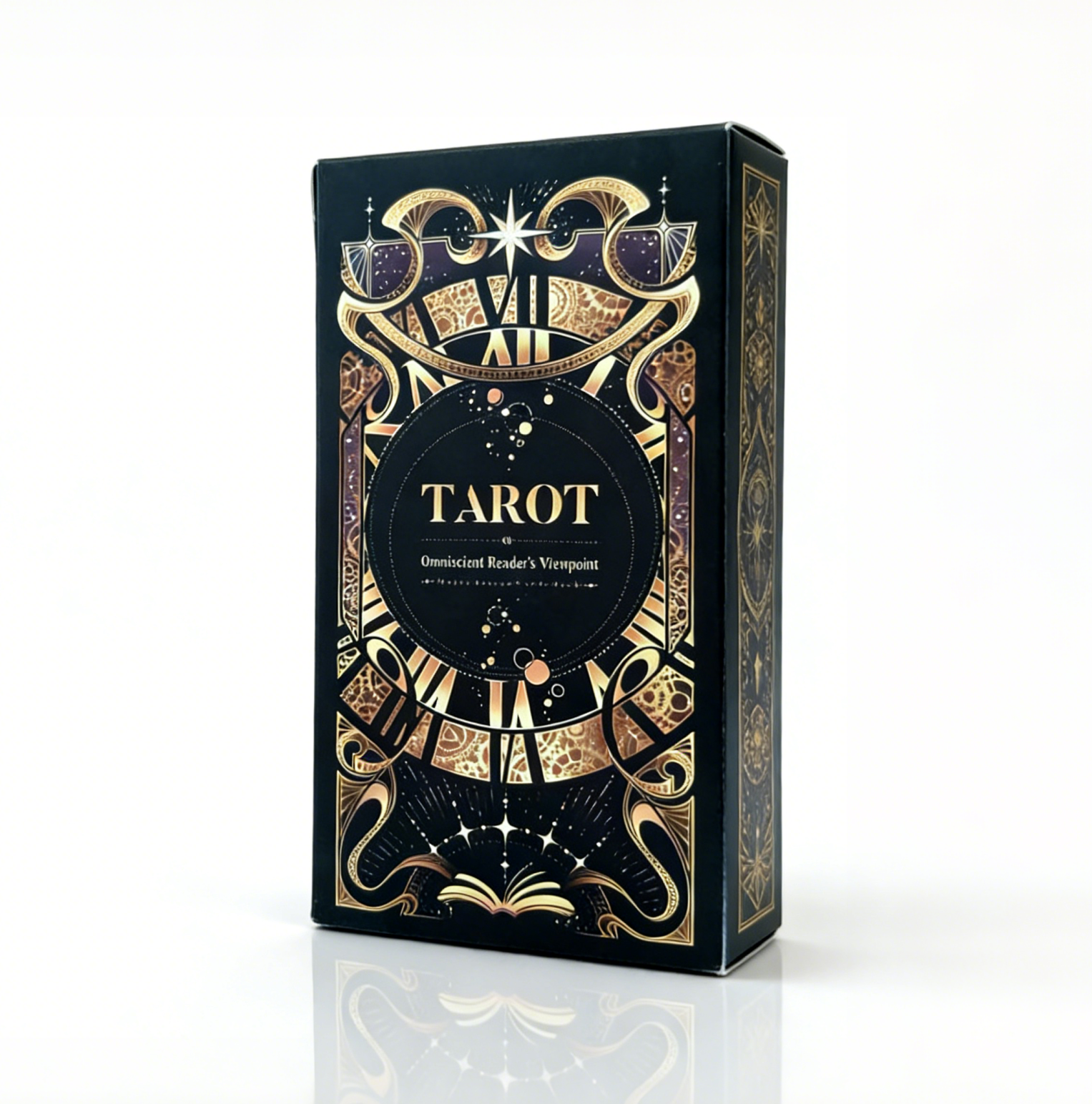
- Official Omniscient Reader's Viewpoint (ORV) Taiwan Event Exclusive Tarot Card Set - a premium collector-style card set for fans who love ORV's symbolism, fate, constellations, and character imagery.
- Omniscient Reader's Viewpoint Ancient Dream Keycap Set 138 Keys - a practical display piece for readers who want ORV aesthetics on a keyboard setup or desk corner.
- Official Omniscient Reader's Viewpoint Page Secrets Collectible Cards - an easy entry point for fans who enjoy card-style collectibles and character-focused merch.
You can also browse the full Omniscient Reader's Viewpoint collection for more ORV plush, cards, keychains, and display items.
If you love anime, manhwa, web novels, and character-driven fandom essays, keep following Oriloot for more deep dives into the stories fans cannot stop talking about.


Share:
Why Heaven Official's Blessing Is So Loved: A Beginner-Friendly Guide to TGCF
Why Heaven Official's Blessing Is So Loved: A Beginner-Friendly Guide to TGCF